
Statement of Intent
At St. Joseph’s, we believe that a high-quality education in English will teach pupils to speak and write fluently so that they can communicate their ideas and emotions to others through their reading, listening and oracy skills. Through reading in particular, we aim for pupils to have a chance to develop culturally, emotionally, intellectually, socially and spiritually. Literature, especially, plays a key role in such development at our school. Our aim is for reading to enable pupils both to acquire knowledge and to build on what they already know. Our intent is to ensure that all pupils read with automaticity, fluency and prosody as well as good understanding. We intend for our pupils to develop the habit of reading widely and often, for both pleasure and information and to acquire a wide vocabulary. Through reading, we aim for pupils to gain an understanding of grammar, punctuation and the conventions of texts and be able to apply this to their writing.
Our reading curriculum is grounded in Gough and Tunmer’s Simple View of Reading (shown below). It shows word reading and language comprehension as the two dimensions of reading that need to come together to enable reading comprehension.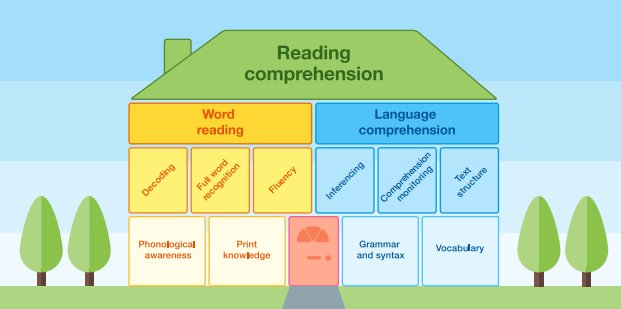
Useful Information (please click on links below)
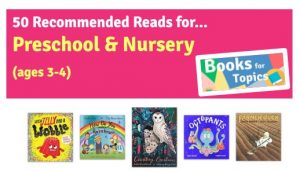
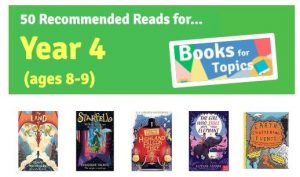
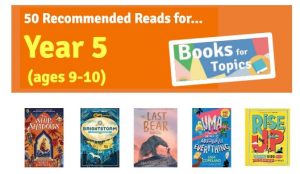
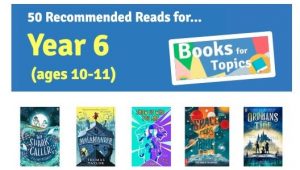
Summer Term 2023 Recommended Reads
Reading at home (clink on links to access)
 |
 |
 |
 |
 |
 |
 |
 |
Phonics/Early Reading
Statement of Intent
At St Joseph’s we believe it is vital that your child finds learning to read a rewarding, successful and enjoyable experience. We teach early reading skills using the Sounds Write phonics programme. This programme is highly successful in teaching children to read and spell because it starts with what all children know from a very young age – speech sounds. Then, using a very systematic approach, it teaches them how these sounds are coded within our writing system.
The four key concepts children need to learn are:
- letters are symbols that represent sounds
- sounds can be spelled using 1, 2, 3 or 4 letters
- the same sound can be spelled in different ways
- the same spelling can represent different sounds
The three keys skills children need to master are:
- blending
- segmenting
- phoneme manipulation
Children in our Foundation Stage begin with the Initial Code where they practice all 3 key skills whilst learning the 1:1 sound-spelling correspondences, securing their understanding that letters are symbols that represent sounds. This builds up trust in a truly reversible system, enabling them to decode and encode a wide range of words and sentences. At first, children learn to read and write simple one syllable words with a CVC structure. Complexity of word structure systematically builds up so that children apply their code knowledge to monosyllabic words with up to 6 sounds.
Once the Initial Code has been mastered, children continue to practice all key skills whilst learning the Extended Code which explores key concepts 2, 3 and 4.
Sounds Write sessions are taught each day to all children in Reception, Year 1 and Year 2.
Phonics Screening Check
What is the phonics screening check?
The phonics screening check is an assessment to confirm whether individual children have learnt phonic decoding to an appropriate standard.
It will identify the children who need extra help so they are given support to improve their reading skills. The will then be able to retake the check test so that schools can track them until they are able to decode.
Who is it for?
The screening check is for all Year 1 pupils – and children in Year 2 who previously did not meet the standard of the check in Year 1. (Please see the video below for more information.)
The link below will take you to the DfE information page about the check, should you have any questions, as always you can come into see your child’s class teacher.
https://www.gov.uk/government/statutory-phonics-screening-check
Useful Information (click on links to access websites)

Sounds-Write is a phonics programme based on the science of reading. This multisensory, comprehensive approach to literacy has been designed by teachers.
Phonics to Fluency
During the first six weeks of the school year, KS2 take part in ‘Phonics to Fluency’. The aim of this is to develop fluency and comprehension when children have secured their phonetic knowledge as well as improve their oracy skills. This approach has been developed to support children as they transition from relying on “sounding out” to reading smoothly with automaticity, accuracy and prosody.
Each day, children practise a paragraph of a longer piece of text, using various strategies including echo reading, choral reading and partner reading. Each day, children also ‘text mark’ their text ready for their performance on day 5. The aim of the text marking section of the session is for children to apply their understanding of expression, pace and volume in order to read with accuracy and prosody.
Reading Comprehension
As well as Phonics Early Reading sessions (KS1) and Phonics to Fluency Sessions (KS2) reading comprehension lessons are taught at St. Joseph’s. This involves all children in the class studying the same novel or text. The aims of these sessions are the following:
- They provide challenge for all.
- All children are exposed to high-quality texts.
- They develop pleasure for reading and ensure that everyone feels included.
- Children see both teachers, peers and themselves as readers.
SEND children receive support during these lessons through the use of adaptive teaching strategies. These may include pre-reading of the text, modified knowledge notes and questions which may include further scaffolding, extra support from an adult and, in some cases, the use of technology in order to help them to access the text.